



Marble Vanity Ideas for a Bathroom That Lasts
A marble vanity changes the way a bathroom feels before a fixture is ever turned on. The surface catches morning light, gives cabinetry a sense of permanence, and makes a compact powder room feel considered rather than crowded. The best marble vanity ideas begin with the actual slab, not a generic sample: every block has its own veining, background color, movement, and quiet details.
For homeowners planning a new bathroom in Savannah or along the coast, that individuality matters. Marble can be soft and serene, bold and architectural, or richly dramatic. It also asks for thoughtful choices around layout, finishes, and daily care. When those choices work together, a marble vanity becomes a lasting focal point rather than simply another countertop.
Start With the Marble, Not the Mood Board
A mood board can establish direction, but marble deserves to lead the conversation. A small tile or countertop chip cannot show the full character of a natural-stone slab. Veins may open across a wide vanity, shift in color at the edge, or create a striking focal point around the sink cutout.
Visit a slab gallery before settling on cabinet color or hardware. Bring finish samples if you have them, but allow room for the stone to influence the scheme. A warm white marble may bring out the depth in natural oak cabinetry. A cooler gray marble can sharpen a navy or charcoal vanity. A slab with gold or taupe veining may be the link between unlacquered brass fixtures and soft painted walls.
This is also where scale becomes clear. Fine, linear veining often suits a calm, tailored primary bath. A bold, branching pattern can give a small powder room an unforgettable point of view. Neither is better. The right selection depends on whether you want the vanity to settle quietly into the room or define it.
Marble Vanity Ideas That Feel Intentional
Let a floating vanity show off the stone
A floating vanity keeps the floor visible and gives marble a clean, contemporary setting. It works particularly well in smaller bathrooms, where the added visual space can make the room feel less enclosed. Choose a substantial stone edge if you want the marble to have more presence, or use a thinner profile for a lighter, more minimal look.
The trade-off is storage. Wall-mounted cabinetry has less forgiving interior volume than a large furniture-style vanity, so plan drawers carefully. Deep drawers beneath the sink and a recessed medicine cabinet can carry much of the practical load.
Use a full-height backsplash for a quieter kind of drama
A matching marble backsplash that rises 4 to 6 inches is classic and easy to coordinate. Taking the same stone all the way to the mirror or a shelf line creates a more immersive result. It eliminates the visual break between countertop and wall, which can make a modest vanity feel more substantial.
For highly veined marble, a full-height backsplash is a chance to display the movement in the slab. Ask your fabricator about bookmatching if you are using two adjacent pieces. The mirrored veining can be remarkable, especially behind a pair of wall sconces. It is a stronger statement, though, and it may compete with patterned wallpaper or elaborate tile. Let one surface lead.
Pair a warm marble with natural wood
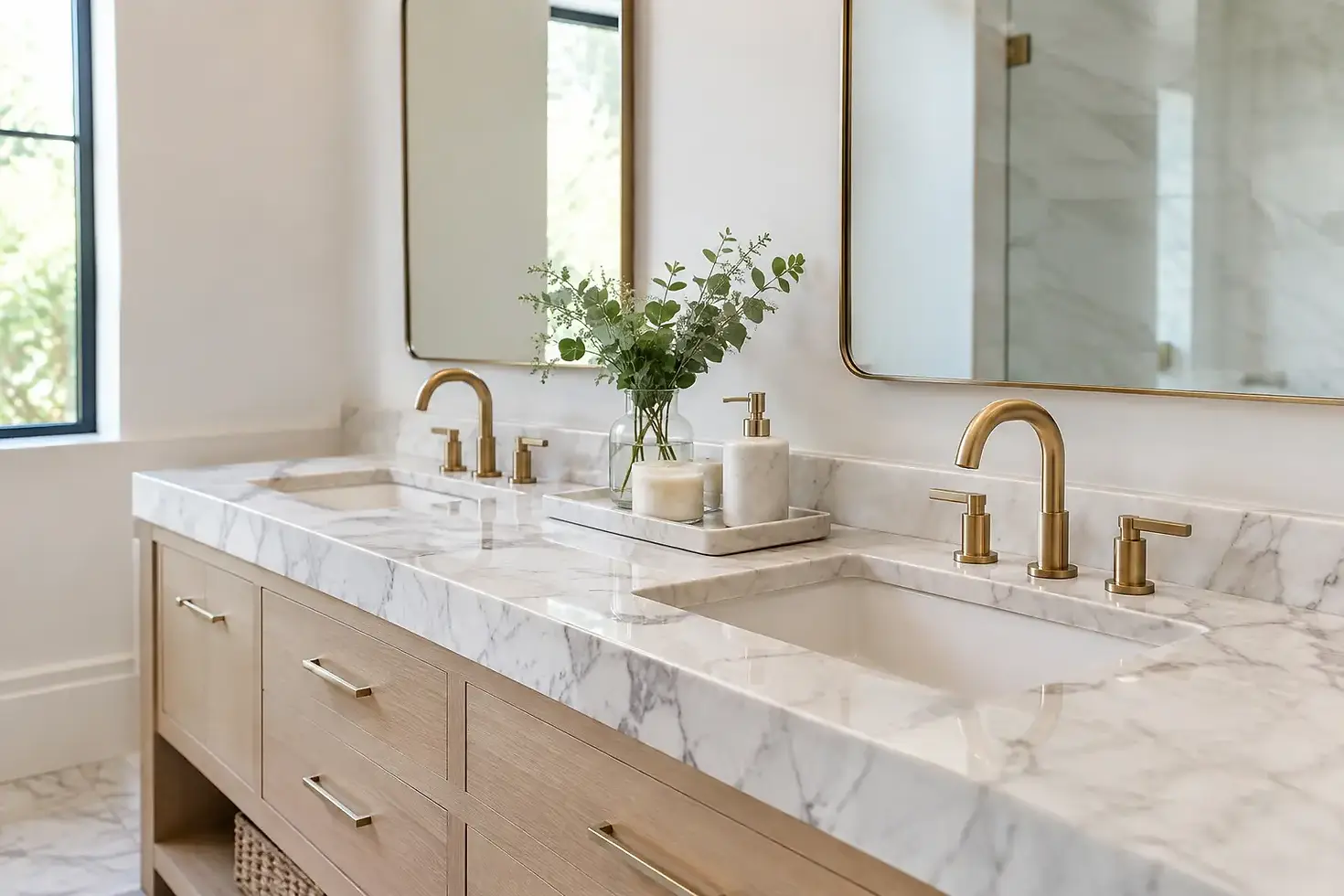
White painted cabinetry remains a reliable choice, but it is not the only path. Walnut, white oak, and other wood finishes give marble an inviting, lived-in quality. This pairing works especially well with creamy marbles, stones carrying beige or honey notes, and brushed brass or bronze fixtures.
A wood vanity also helps a bright marble surface feel grounded. In a primary bath with generous daylight, it can prevent an all-white palette from appearing too cool or clinical. Select a finish suitable for bathroom humidity, and keep the grain simple if the stone has active veining. Too much movement in both materials can make the design feel busy.
Build contrast with dark cabinetry
Deep green, ink blue, espresso, and charcoal cabinetry create a crisp frame for pale marble. This approach is particularly effective in powder rooms, where a rich cabinet color can feel like a design decision rather than a risk. A bright marble top and backsplash bring light back into the room, while polished nickel, chrome, or aged brass fixtures complete the contrast.
Dark cabinetry shows dust and water spots more readily than mid-tone finishes, and very dark rooms need considered lighting. Add layered illumination: a ceiling fixture for overall light, sconces at the mirror for faces, and good task lighting near the vanity. Marble looks different throughout the day, so view samples under both daylight and the artificial lighting you plan to use.
Turn one slab into a furniture-style centerpiece
For a bathroom with room to breathe, a marble-topped vanity can read like a fine piece of furniture. Consider a console-style base with open lower shelving, turned legs, or a tailored wood cabinet with framed drawers. An ogee or eased edge can reinforce the more traditional direction without feeling overly formal.
This idea is ideal for a guest bath or primary bath where appearance matters as much as hidden storage. It is less practical for a busy family bath with a dozen bottles, towels, and appliances to conceal. In that case, choose the furniture-inspired profile but preserve deep closed drawers below.
Use one marble across the vanity and shower details
Repeating marble in measured amounts gives a bathroom a finished, architectural look. The vanity top might continue as a shower threshold, a recessed shampoo niche shelf, or a bench cap. These small repeats make the room feel connected without covering every wall in stone.
The amount of repetition depends on the marble. A quiet, lightly veined stone can carry more square footage. A dramatic stone often looks best in focused applications, where each piece has space to be appreciated. This is a good opportunity to plan cuts from a full slab with your fabricator so the best areas of movement are placed where they will be seen.
Details That Protect the Design
The sink choice affects both the look and the maintenance of a marble vanity. An undermount sink leaves the stone uninterrupted and makes the counter easy to wipe clean. A vessel sink puts more emphasis on the basin and can work beautifully with a simple stone profile, but it requires careful faucet-height planning and may create more splash around the countertop.
Edge profiles matter more than they seem. A straight eased edge suits clean-lined cabinetry and lets the marble speak for itself. A mitered edge gives the appearance of a thicker, more monolithic slab. A classic ogee profile adds formality and pairs naturally with traditional millwork. Avoid choosing an elaborate edge simply because it is available. The profile should belong to the room.
Do not overlook the faucet spread. A widespread faucet creates a classic, balanced composition on a generous vanity. A single-hole faucet keeps a smaller counter cleaner and leaves more stone visible. If your marble has a particularly beautiful area of veining, thoughtful fixture placement can preserve it rather than cut through it.
Living Well With a Marble Vanity
Marble is a natural material, and it will not behave like a manufactured surface. It can etch when acidic products such as citrus, vinegar, or certain cosmetics sit on the stone. Etching is a change in the surface finish, often visible as a dull mark on polished marble. It is different from staining, which occurs when color is absorbed into the stone.
For many owners, this gentle evolution is part of marble's appeal. A honed finish can make etching less noticeable than a high-polish surface, which is why it is often a practical choice for an active primary bathroom. Sealing helps improve resistance to absorption, but it is not a shield against every spill or product.
Use a pH-neutral stone cleaner, wipe up toothpaste, makeup, and spills promptly, and avoid abrasive powders or acidic cleaners. A tray beneath frequently used products keeps bottles from leaving moisture rings and adds an organized look. If a perfectly uniform surface with minimal maintenance is the priority, marble may not be the right material for that specific bathroom. But if you appreciate patina and real material character, it offers something manufactured surfaces cannot duplicate.
Hand-Pick the Slab That Becomes Your Vanity
A marble vanity is not chosen by color alone. You are selecting movement, depth, edge potential, and the particular areas of a slab that will become the surface you see every day. That is why viewing full slabs is worth the time. It gives you a chance to compare options beside cabinetry, tile, metal finishes, and your fabricator's layout plan.
At Garpa Co., homeowners, designers, and fabricators can hand-pick a slab from a curated natural-stone collection, then plan a vanity that reflects the room and the people who use it. Bring your samples, ask to see several slabs, and imagine the stone at full scale. The right piece will not merely match the bathroom. It will give the room its own enduring point of view.


Comments