




Countertop Material Comparison for Lasting Style
A countertop becomes part of the rhythm of a home. It catches morning coffee, homework papers, grocery bags, hot pans, and the occasional dropped glass. A thoughtful countertop material comparison starts there: not with a single “best” stone, but with the surface that will look beautiful in your space and feel right for the way you live.
Natural stone offers something manufactured surfaces cannot duplicate. Each slab carries its own movement, mineral detail, and color variation. That individuality matters when a kitchen island, vanity, or bar is meant to be a focal point. It also means the exact slab deserves to be seen in person before you decide.
Countertop Material Comparison: Start With Your Priorities
Before falling in love with a particular color, consider what the surface needs to do. A busy family kitchen may call for easy stain resistance and high scratch resistance. A powder room vanity can invite a softer, more delicate stone. For a designer-led project, the veining in one exceptional slab may be the starting point for the cabinetry, hardware, and lighting around it.
There are practical questions worth answering early. Will you place hot cookware directly on the counter? Do you prefer a polished, reflective finish or a quieter honed surface? Are you comfortable with a stone that develops character over time, or do you want it to look largely unchanged? Natural stone is durable, but each type has a different relationship with acids, oils, moisture, and daily use.
Marble: Classic Beauty With a Lived-In Finish
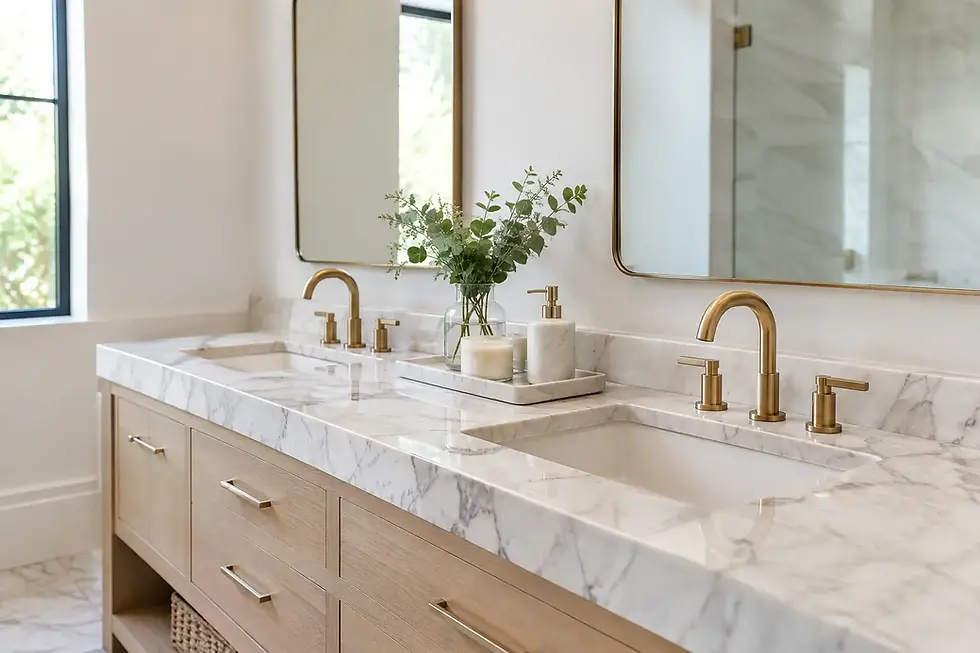
Marble is chosen for its depth, graceful veining, and unmistakable sense of permanence. From bright white fields with soft gray movement to richly colored dramatic slabs, it brings a level of visual refinement that works in traditional homes, tailored contemporary kitchens, and elegant baths alike.
Its trade-off is well known: marble is softer and more reactive than granite or quartzite. Lemon juice, wine, vinegar, and other acidic foods can leave etching, which appears as a dull mark rather than a stain. A quality sealer helps reduce absorption, but it does not make marble acid-proof.
For homeowners who appreciate patina, marble can be an excellent kitchen choice. Small signs of use become part of its story. For those who want a pristine, low-maintenance work surface, marble often performs best on a bathroom vanity, fireplace surround, baking station, or a lower-use island section. Honed marble can make etching less visually prominent than a highly polished finish.
Granite: Dependable and Naturally Varied
Granite remains a strong choice for hardworking kitchens. It is dense, heat resistant, and generally more resistant to scratching and etching than marble. With proper sealing, it handles everyday cooking and cleanup with confidence.
The look of granite is broader than many people expect. Some slabs offer subtle, cloud-like movement; others have pronounced crystals, sweeping veins, or deep mineral contrast. Because granite patterns can vary substantially from slab to slab, viewing full pieces is particularly valuable. A small sample rarely tells the whole story.
Granite suits homeowners who want natural stone with straightforward care and plenty of visual options. It is a practical fit for active kitchens, outdoor-adjacent entertaining areas, and projects where durability is a leading priority. As with any natural stone, use a cutting board rather than treating the counter as one, and reseal when your fabricator recommends it.
Quartzite: Drama and Strength in One Slab
Quartzite is often the answer for homeowners drawn to the pale backgrounds and fluid veining associated with marble but seeking a harder surface. True quartzite is formed when sandstone is transformed under intense heat and pressure. The result is a hard natural stone with excellent scratch resistance and strong heat performance.
Its appearance can range from airy white and gray to warm gold, green, blue, or richly layered earth tones. Many quartzites make striking islands because their movement reads beautifully across a large surface. In an open kitchen, one distinctive slab can give the entire room its point of view.
The important detail is verification. Some stones marketed under the quartzite name are actually softer materials with different care requirements. Ask your stone supplier and fabricator about the specific slab, its composition, recommended finish, sealing needs, and suitability for the intended application. A reliable material decision is always slab-specific, not just category-specific.
Soapstone: Quiet, Tactile, and Forgiving
Soapstone has a velvety feel and a grounded, architectural look. It is commonly charcoal gray when installed and may deepen over time, especially if enhanced with mineral oil or a darkening treatment. Its soft white veining can be subtle or bold, giving the stone a handcrafted presence that pairs beautifully with wood cabinetry, aged brass, and painted finishes.
Unlike marble, soapstone is highly resistant to acids and does not require sealing. That makes it appealing in kitchens where citrus, tomatoes, and wine are used often. It also tolerates heat well.
Soapstone is softer than granite and quartzite, so scratches and small dents are possible. Many owners find this part of its charm, and minor surface marks can often be softened or repaired. It is best for those who prefer a surface with warmth and evolving character over a flawless, glossy appearance.
Limestone: Soft Texture for Refined Spaces
Limestone offers gentle movement, muted color, and an inviting matte quality. Cream, sand, taupe, gray, and soft blue-gray tones make it especially suited to calm, layered interiors. It can bring a coastal ease to a Savannah-area home without feeling themed or overly casual.
Because limestone is generally porous and sensitive to acids, it needs more consideration in an active kitchen. Sealing is essential, and spills should be wiped promptly. A honed finish is often the natural choice, complementing its understated texture while making minor wear less noticeable.
Limestone is particularly compelling for powder room vanities, bathroom surfaces, fireplaces, and feature installations. In the right kitchen - one where the owners understand its care needs and welcome an aged finish - it can be deeply rewarding. The question is not whether limestone is “good enough.” It is whether its softer, more organic character belongs in the life of that room.
Choosing by Room, Not Just by Material
A whole home does not need one countertop material everywhere. In fact, combining stones can make a project more personal. A durable quartzite or granite may serve the main kitchen perimeter, while marble creates a memorable island or coffee bar. Soapstone can bring contrast to a pantry or wet bar. Limestone may give a powder room the quiet luxury that a high-traffic kitchen does not require.
Think about lighting before making a final selection. A slab that appears cool in a bright gallery may look warmer beside your cabinetry or under evening lighting. Bring cabinet samples, paint chips, flooring, tile, and hardware when possible. Lay them directly on the stone. This is where undertones become clear, and where a beautiful selection becomes a coordinated room.
Edge profiles and finish also affect performance and appearance. A honed surface feels relaxed and can disguise certain signs of use, while polishing adds reflection and brings out color contrast. A simple eased edge feels clean and current; a more detailed profile can reinforce traditional millwork. Your fabricator can help match these details to the material and the design.
Why Hand-Picking the Slab Matters
Natural stone is not a repeat pattern. The slab you select may have a dramatic vein, a quiet corner, a mineral deposit, or a shift in color that changes how it should be fabricated. For an island, you may want to reserve the most expressive area for the center. For a vanity pair, you may want adjacent slabs that can be bookmatched for symmetry.
At Garpa Co., viewing live inventory allows homeowners, designers, and fabricators to assess those details at full scale. It is also the best way to discuss where seams, cutouts, and backsplash pieces may fall before fabrication begins. A photograph can start the conversation. Standing in front of the stone is where confidence takes over.
The right countertop should support daily life while giving the room a surface worth looking at for years. Bring your samples, your questions, and an honest picture of how you use your home. Then hand-pick the slab that feels uniquely yours.


Comments