




Limestone Interior Applications That Feel Timeless
- Garpa Company
- 27 minutes ago
- 5 min read
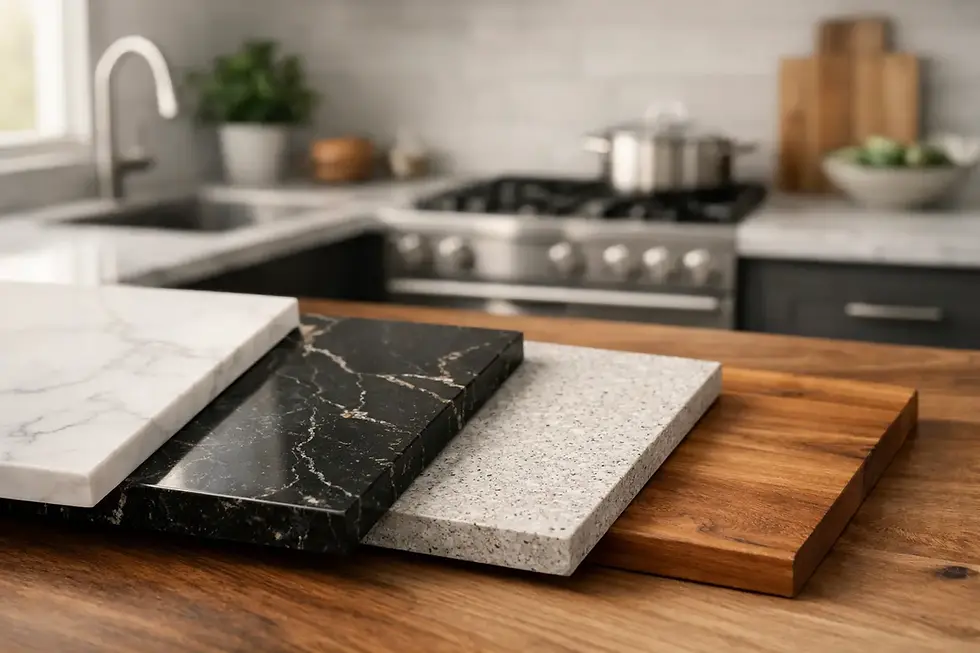
A limestone sample can look almost quiet beside a dramatic quartzite or richly veined marble. Then it is placed against warm oak cabinetry, plaster walls, or aged brass, and the room begins to make sense. Limestone interior applications bring a soft, grounded character that feels considered rather than decorated. Every slab carries its own fossils, mineral shifts, and movement, making the finished space unmistakably personal.
For homeowners, designers, and fabricators, limestone is most compelling when its natural qualities are part of the plan. It is not a material chosen for a perfectly uniform surface. It is chosen for warmth, depth, and the kind of lasting presence that improves a room without asking to be the loudest element in it.
Where Limestone Works Best Indoors
Limestone has a relaxed elegance that suits both classic homes and cleaner contemporary interiors. Its muted palette often ranges from cream and ivory to sand, taupe, gray, and charcoal. Because it does not compete aggressively with cabinetry, tile, metal finishes, or art, it gives a project room to breathe.
Kitchen countertops and islands
A limestone island can become the visual anchor of a kitchen, particularly when paired with painted cabinets, natural wood, or a softly textured backsplash. Honed limestone is often the preferred finish for counters because it has a low-sheen, touchable surface that suits the stone's natural character.
There is a trade-off. Limestone is more porous and generally softer than granite or quartzite, so it is not the first choice for every high-traffic family kitchen. Acidic foods and drinks can etch the surface, and spills should be wiped promptly. A quality sealer helps resist staining, but it does not make limestone maintenance-free.
For the right household, those subtle marks can become part of the stone's patina. For a cook who wants a crisp, highly resistant work surface with minimal care, quartzite or granite may be the better fit. For an island used primarily for gathering, serving, and everyday living, limestone offers an exceptional sense of warmth.
Bathroom vanities and powder rooms
Bathrooms are among the most natural limestone interior applications. A limestone vanity top, integrated backsplash, or full-height wall brings a spa-like calm without relying on a trend-driven look. Its soft colors work beautifully with unlacquered brass, polished nickel, black fixtures, white oak, and warm painted cabinetry.
Powder rooms are especially good places to be expressive. A sculptural limestone vessel sink, a floating vanity in a single slab, or a bookmatched feature wall can create a memorable guest experience in a compact footprint. Because powder rooms see less water and product exposure than a primary bath, they also allow more freedom in material selection.
In full bathrooms, proper fabrication and installation matter. Seams, cutouts, wall transitions, and the slope around wet areas should be planned carefully. Limestone can work on vanity surfaces and walls with appropriate sealing and care, while shower floors require particular attention to finish and slip resistance. A honed or textured surface is generally more practical than a polished one underfoot.
Fireplace surrounds and hearths
Few materials make a fireplace feel as permanent as limestone. A simple slab surround can bring proportion and restraint to a modern living room, while a thicker mantel or carved profile can support a more traditional architecture. The stone's natural variation gives the fireplace depth even when the design itself is clean and minimal.
Heat performance depends on the fireplace system, clearances, and installation details. Your designer, fabricator, and installer should coordinate the stone selection with the appliance specifications rather than treating the surround as an afterthought. A well-planned limestone fireplace becomes a focal point that does not need constant styling to feel finished.
Feature walls, cladding, and architectural details
Limestone is especially effective when it moves beyond the countertop. Full-height slabs can frame a bed, create a refined entry wall, or give a dining room a sense of permanence. In commercial interiors, limestone reception desks and wall cladding communicate quality in a way manufactured materials rarely duplicate.
Bookmatching can turn adjacent slabs into a quiet work of art, with veining that mirrors across a wall or fireplace. Not every limestone needs that treatment. Sometimes the beauty is in a broad, uninterrupted field of stone with gentle fossils and tonal variation. The best approach depends on the slab and the scale of the room.
Selecting Limestone for Your Interior
Choosing limestone starts with looking at full slabs. A small sample cannot reveal the true movement, color range, or fossil pattern that will appear across a kitchen island or feature wall. Natural stone is unique like you, and that individuality deserves to be seen before a final decision is made.
Bring cabinet samples, paint colors, tile, flooring, and fixture finishes to the selection process. View the slab in different lighting when possible. A cream limestone may read warm and golden beside cool white cabinets, yet look balanced and neutral next to a warmer paint color. Veining that appears subtle in a warehouse can become more pronounced under direct lighting in a finished room.
Thickness and edge profile also change the result. A standard-thickness counter with a simple eased edge feels tailored and contemporary. A mitered edge can create the appearance of a thicker, more architectural slab. For vanities and fireplaces, a fabricator can help determine where thickness adds impact and where a lighter detail is more appropriate.
Finish, Sealing, and Daily Care
Most interior limestone is honed, which means the surface has a smooth matte appearance rather than a reflective polish. Honing complements the stone's softness and tends to make minor wear less visually distracting. Depending on the project, brushed or textured finishes may also be considered for walls or floors.
Sealing is a practical part of caring for limestone. A penetrating sealer is typically used to reduce the stone's absorption of liquids and help prevent staining. It should be reapplied on a schedule that reflects the surface's use, the specific stone, and the sealer recommended by the fabricator or installer.
Daily care is straightforward but deliberate. Use a pH-neutral stone cleaner, a soft cloth, and water for routine cleanup. Avoid vinegar, lemon-based cleaners, bleach, and harsh bathroom or kitchen products, as acids and abrasives can dull or etch the surface. Use trivets under hot cookware and coasters beneath drinks, especially on limestone tables or counters.
Etching deserves a clear explanation. It is not the same as a stain. A stain changes the color of the stone after something absorbs into it; etching changes the surface texture when acid reacts with the calcium in limestone. Sealer can help with stains, but it cannot prevent etching. Understanding that distinction helps homeowners choose the material with confidence rather than surprise.
Designing With the Stone's Character
Limestone is often at its best when the surrounding materials respect its restraint. Pair a fossil-rich slab with uncomplicated cabinetry so the stone can remain visible. Use a more uniform limestone when the room already includes patterned tile, strong wood grain, or expressive lighting. In either case, avoid trying to force a natural slab into a manufactured look.
This is also why hand-selecting matters. One slab may have a cloud-like movement suited to a large island, while another may have linear veining that works beautifully for a fireplace surround. At Garpa Co.'s Savannah slab gallery, seeing the actual inventory makes it easier to compare those possibilities with your project materials and choose the slab that belongs in the space.
Limestone asks for a little care, then gives a room something difficult to imitate: a surface shaped by nature, selected by hand, and built to stay. Bring your samples, look closely at the full slab, and let the stone show you where it wants to live.


Comments