




Granite Versus Marble Countertops: Which Fits?
A white marble island can make a kitchen feel quietly unforgettable. A deep, crystalline granite can give the same room a grounded, enduring presence. When choosing granite versus marble countertops, the right answer is not simply about which stone is tougher. It is about how you live, what you notice, and whether you want a surface that stays visually pristine or one that records a little of life along the way.
Both are genuine natural stones, formed over time and cut into one-of-a-kind slabs. Both bring depth that manufactured materials work hard to imitate. Yet their performance and personality are distinctly different, especially in hardworking kitchens, busy baths, and spaces designed for coastal entertaining.
Granite Versus Marble Countertops: The Essential Difference
Granite is an igneous stone, created as molten material cools beneath the earth's surface. Its mineral structure gives it the granular pattern, strength, and range of colors people recognize, from soft whites and warm creams to charcoal, blue, green, and dramatic black.
Marble is a metamorphic stone, most often formed when limestone changes under heat and pressure. Its signature is movement: veining that may be fine and feathery, bold and architectural, or soft enough to resemble clouds. Marble tends to have a more luminous surface than granite, with light seeming to travel slightly beneath the finish.
That geological difference shapes the ownership experience. Granite generally offers more resistance to scratching, heat, and everyday staining. Marble is softer and more reactive to acids, but its patina is part of why many designers and homeowners choose it. Neither material is better in every room. Each asks for a different kind of relationship.
Choose Granite for Confident Everyday Performance
For a kitchen that sees frequent cooking, packed lunches, serving platters, and spontaneous gatherings, granite is often the practical favorite. It is exceptionally hard, and a properly sealed granite countertop stands up well to normal household use. Hot pots should still be placed on trivets when possible, but granite is far less vulnerable to heat damage than many synthetic surfaces.
Granite also gives homeowners considerable design range. Some slabs are calm and consistent, ideal for a tailored kitchen with painted cabinetry. Others contain sweeping mineral movement, mica sparkle, or rich shifts in color that become the focal point of the room. The exact slab matters. Two stones sold under the same name can look remarkably different once opened full size.
Granite is not maintenance-free, but its care is simple. Wipe spills with a soft cloth, use a pH-neutral stone cleaner or mild soap, and maintain the sealer according to the fabricator's recommendation. Darker granites can be especially forgiving visually, while lighter options may make spills more noticeable before they are wiped away.
Granite is a particularly strong choice when durability is the first priority, when children or guests use the kitchen often, or when you want natural stone without feeling precious about every glass of lemonade. It also works beautifully for outdoor-adjacent entertaining areas, bar tops, and high-use bathroom vanities.
Choose Marble for Depth, Softness, and Patina
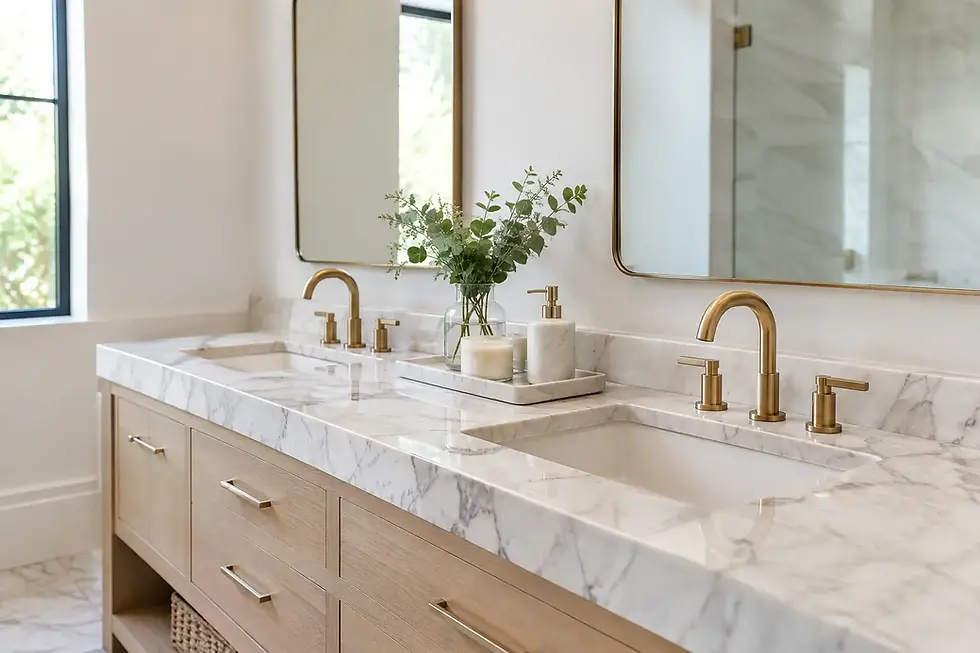
Marble makes a different promise. It offers visual softness that is difficult to duplicate, whether the room calls for classic Calacatta-style drama, gentle gray veining, warm beige movement, or a darker, moodier stone. In a bathroom, powder room, fireplace surround, or low-use bar, marble can be an effortless statement.
In a kitchen, marble deserves an honest conversation. Lemon juice, vinegar, wine, tomatoes, and some cleaners can etch the surface. Etching is not always a stain. It is a change in the stone's finish that may appear as a dull or lighter mark, particularly on polished marble. Because marble is also more porous than granite, spills should be wiped up promptly and sealing is essential.
For some homeowners, those small marks are a reason to choose something else. For others, they are part of the appeal. A honed finish can make etching less conspicuous than a high-polish finish, and a marble countertop can grow more relaxed and personal over time. Think of a favorite leather chair or an old wood table: the character develops through use.
If you love marble but want fewer maintenance concerns, placement can be the answer. Use it on a baking station, a bathroom vanity, a waterfall island that receives lighter food prep, or a feature wall. Pair it with a more resilient stone in the main work zone. A mixed-stone kitchen can feel considered rather than compromised.
What About Scratches and Chips?
Granite has the advantage for scratch resistance, while marble can scratch more easily from abrasive materials or hard-edged objects. Neither countertop should be used as a cutting board. Both can chip at a sharp, unsupported edge if struck hard enough, which is why thoughtful fabrication, edge details, and support are as important as the slab itself.
Let the Room's Design Lead the Decision
Granite often brings texture, mineral detail, and visual energy. It can anchor warm white cabinetry, soften a modern black kitchen, or add an unexpected color note to a neutral palette. A leathered or honed granite can be especially compelling for homeowners who prefer a tactile, low-sheen finish.
Marble is often selected for its elegance and movement. It suits traditional homes, clean-lined contemporary spaces, and rooms where cabinetry, brass, plaster, or natural wood need a refined counterpoint. Its veining can guide the entire palette, helping you choose paint, tile, hardware, and lighting with more confidence.
Do not judge either stone from a small sample alone. Veining, background color, and mineral variation can shift dramatically across a full slab. The slab you hand-pick should be viewed alongside cabinet samples, flooring, tile, and metal finishes whenever possible. Natural stone is unique like you. That individuality is the point.
A Practical Way to Decide Between Granite and Marble
Start with the surface's job. A family kitchen with heavy daily cooking may lean toward granite. A primary bath where beauty and calm set the tone may be ideal for marble. A vacation property, a formal entertaining space, or a client project can go either direction depending on who will care for the stone and how the room will be used.
Next, decide how you feel about patina. If a faint etch mark will distract you every morning, choose granite or reserve marble for a lower-contact area. If you appreciate the softened, lived-in quality of natural materials, marble may be exactly what gives the room soul.
Then consider the complete installation, not just the stone name. Finish, thickness, edge profile, seam placement, cabinet support, sink cutouts, and fabrication quality all affect the final result. A beautiful slab deserves careful planning. Designers and fabricators can help position the most dramatic sections of the stone where they will have the greatest impact.
For homeowners in Savannah and the surrounding coastal region, viewing slabs in person is especially valuable. Daylight, warm interior lighting, and the colors common to Lowcountry homes can all change how a stone reads. At Garpa Co.'s public slab gallery, you can compare live inventory and select the exact material that will become part of your home, rather than relying on a small sample and a stock photo.
Care That Protects the Beauty You Chose
Whether you choose granite or marble, use cutting boards, wipe spills without delay, and avoid harsh cleaners, scouring powders, and acidic products. A soft cloth, warm water, and a stone-safe cleaner handle most daily care. Ask your fabricator about sealing intervals and any finish-specific recommendations.
Natural stone is not meant to look identical from one piece to the next. It carries mineral shifts, veining, fissures, and variation created by nature, not a factory mold. Selecting a slab in person lets you embrace those details with clear expectations and turn them into a design advantage.
The best countertop is the one you will enjoy touching, using, and seeing every day. Choose granite when you want steadfast performance with natural presence. Choose marble when its depth and evolving character feel worth the care. Either way, choose the actual slab with your room, your lifestyle, and your eye in mind.


Comments