



Quartzite Island Design Examples That Feel Personal
A kitchen island is where the first design decision often becomes the one everyone remembers. The right slab can make a quiet room feel collected, give a traditional kitchen a cleaner edge, or bring warmth to crisp white cabinetry. These quartzite island design examples show how a natural stone island can set the direction without making the rest of the kitchen compete.
Quartzite brings something manufactured surfaces cannot repeat: each slab has its own movement, mineral color, and depth. It is also a hardworking choice for kitchens, valued for its heat resistance and durable surface when properly fabricated and cared for. The key is choosing a slab that suits how the room will be used, not simply how it looks in a small sample.
Quartzite island design examples for every kitchen mood
A waterfall island with soft white quartzite
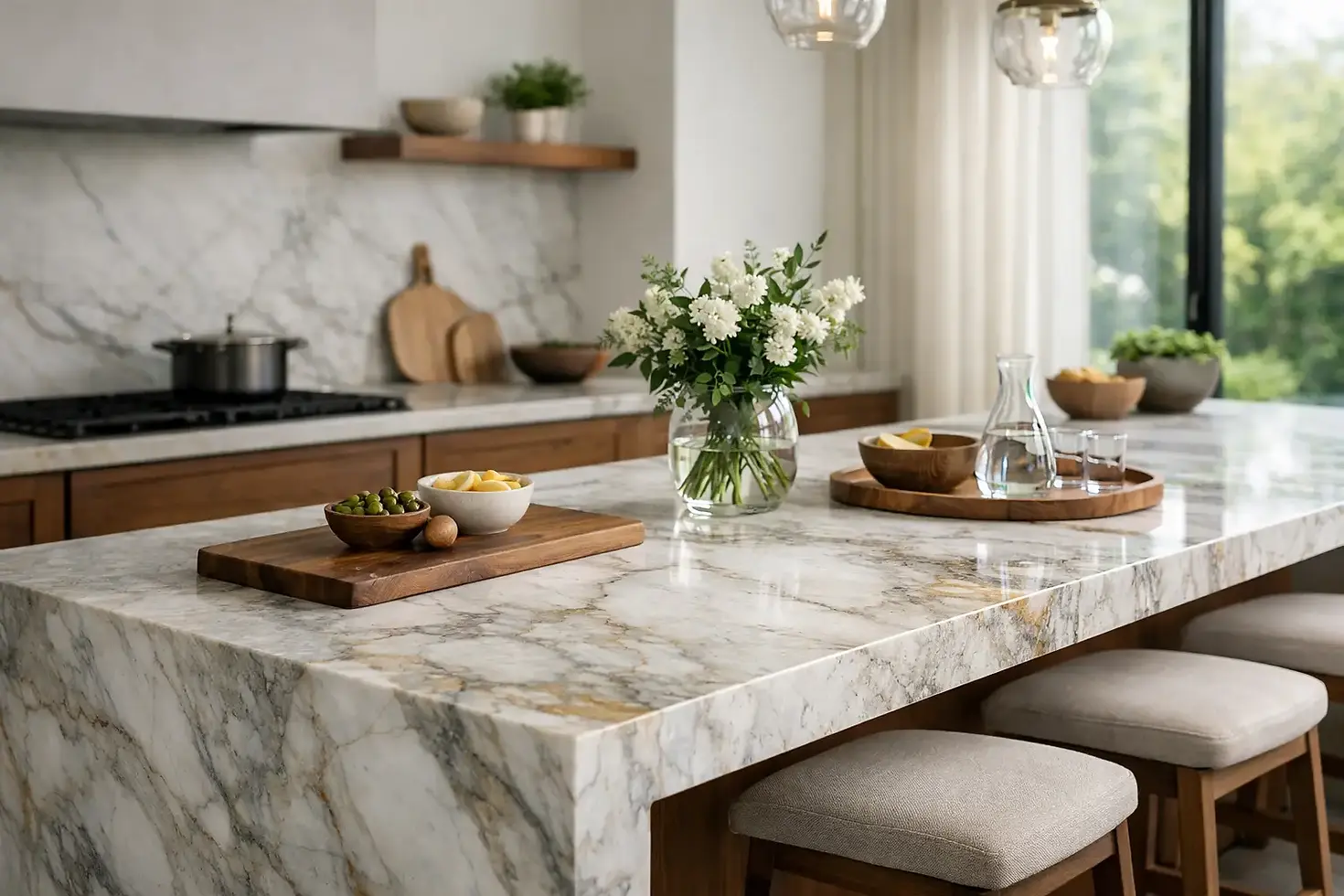
A waterfall edge carries the stone down both ends of the island to the floor. In a kitchen with flat-panel white oak cabinetry, a soft white quartzite with gentle gray or warm taupe veining creates a calm, architectural centerpiece. The stone feels substantial, while the wood keeps the room from becoming too cool.
This approach works especially well in open-concept homes, where the island is visible from the living area. Keep the perimeter counters quieter - perhaps the same quartzite with a simple eased edge, or a complementary understated stone - so the waterfall reads as intentional rather than overwhelming.
There is a practical consideration. Waterfall fabrication requires additional material and careful vein matching, which can affect the slab quantity and project budget. When the pattern is directional, reviewing the full slabs and laying out the cuts with the fabricator is essential.
A richly veined statement island with painted cabinetry
For homeowners who want the island to carry more personality, choose quartzite with distinct sweeping veins in charcoal, blue-gray, gold, or rust. Set it against painted cabinetry in a grounded color such as deep green, navy, mushroom, or warm cream. The contrast gives the kitchen a tailored look while letting the stone remain the focal point.
A dramatic slab does not require dramatic everything else. Simple cabinet fronts, unlacquered brass hardware, and clear or linen-shaded pendants allow the natural movement to hold attention. If the quartzite contains warm gold mineral notes, repeat that warmth in the faucet finish or wood bar stools rather than introducing several new colors.
This design is best for a large island with uninterrupted surface area. A busy stone cut into too many sections around a prep sink, cooktop, or raised bar can lose its visual rhythm. A designer or fabricator can help position the most expressive portion of the slab where it will be seen from the main entrance to the kitchen.
A honed quartzite island in a coastal kitchen
Coastal Georgia interiors often call for light, but light does not have to mean stark. A honed quartzite island with sand, cream, pale gray, and soft green undertones feels relaxed beside rift-cut white oak, woven counter stools, and plaster-like walls. The honed finish has less reflectivity than polished stone, giving the room an easy, lived-in character.
This is a particularly useful direction when a kitchen receives strong daylight. Polished quartzite can be beautiful in bright rooms, but a honed surface softens glare and makes the stone’s texture feel more tactile. Finish preference is personal, though honed stone may show fingerprints, oils, or water marks more readily depending on the specific material and color.
Ask to see a finish sample from the exact quartzite under consideration. The same stone can look remarkably different polished versus honed, and its practical maintenance needs may change with the finish.
Dark quartzite paired with warm wood
Not every island needs to brighten the room. Deep charcoal, brown, black, or green-black quartzite can create a handsome anchor in a kitchen with natural walnut, oak, or medium-toned floors. This combination is especially effective in historic homes and new builds that need more visual weight.
A leathered finish can add another layer of interest, with a textured surface that catches light differently from a high polish. Use it thoughtfully. Heavily textured finishes may be less convenient for tasks like rolling dough or wiping up spills, while a subtly textured finish can offer the depth homeowners love without giving up everyday ease.
Bring home cabinet and flooring samples before choosing a dark slab. Undertones matter. A black quartzite with cool blue movement may feel sharp next to orange-toned wood, while one with bronze or olive notes can make the same cabinetry look richer.
A sculptural island with an integrated stone detail
Some of the most memorable quartzite island designs use the material beyond the countertop. Consider a thick mitered edge that gives the island a monolithic profile, a low stone ledge at one end for serving, or a matching quartzite backsplash behind a range. These details create continuity without covering every surface in the same material.
For a more custom expression, use bookmatched quartzite on a large island face or a nearby feature wall. Bookmatching mirrors adjacent slab sections so the veining opens from a central seam. The result can be striking, but it depends on the slab’s pattern. Fine, linear veins may look elegant bookmatched; irregular movement may be more beautiful in a continuous, non-mirrored layout.
The strongest applications begin with the actual slabs, not a photograph. Natural stone is unique like you. A photo can suggest color, but it cannot show the full scale, translucency, or mineral detail that will define the finished island.
How to choose the right quartzite slab for an island
Start with the island’s dimensions and intended functions. A long island with seating, a sink, and a cooktop needs a different layout than a compact prep island. Larger islands may require more than one slab, and seams should be planned around the stone’s movement rather than treated as an afterthought.
Then look at the room from several viewpoints. Stand where someone enters the kitchen, where they sit at the table, and where they view the space from the adjoining living room. A slab with a bold vein may need to be oriented toward the room’s main sightline. A quieter, cloud-like pattern may be the better choice when cabinetry, tile, and lighting already carry visual detail.
Lighting deserves the same attention. Daylight brings out undertones that showroom lighting may soften, while evening pendants can emphasize sparkle, translucence, or dramatic veining. Bring samples of cabinet paint, wood stain, backsplash tile, and hardware to the slab gallery whenever possible. Seeing them together prevents the common mistake of choosing each beautiful material separately, only to find their undertones conflict at home.
Finally, confirm that the stone is true quartzite and discuss care for that particular slab. Quartzite is a natural stone, and performance varies by material. A reputable fabricator can advise on sealing, edge details, support requirements, and daily cleaning. In most kitchens, prompt cleanup, a pH-neutral stone cleaner, and avoiding harsh chemicals are sensible habits that protect the finish over time.
Let the slab lead, then refine the room
A quartzite island does not need to match every other surface in the kitchen. In fact, the best rooms often balance it with simpler supporting materials: painted cabinets, warm wood, handmade tile, or restrained metal finishes. Let the slab provide the movement, then give the eye places to rest.
For Savannah homeowners, designers, and fabricators, hand-selecting a full slab is the most reliable way to make that decision with confidence. At Garpa Co., viewing the stone in person makes it easier to compare scale, color, and natural variation before fabrication begins. Choose the slab that makes you pause, then build the details around what only that piece of stone can do.


header.all-comments