



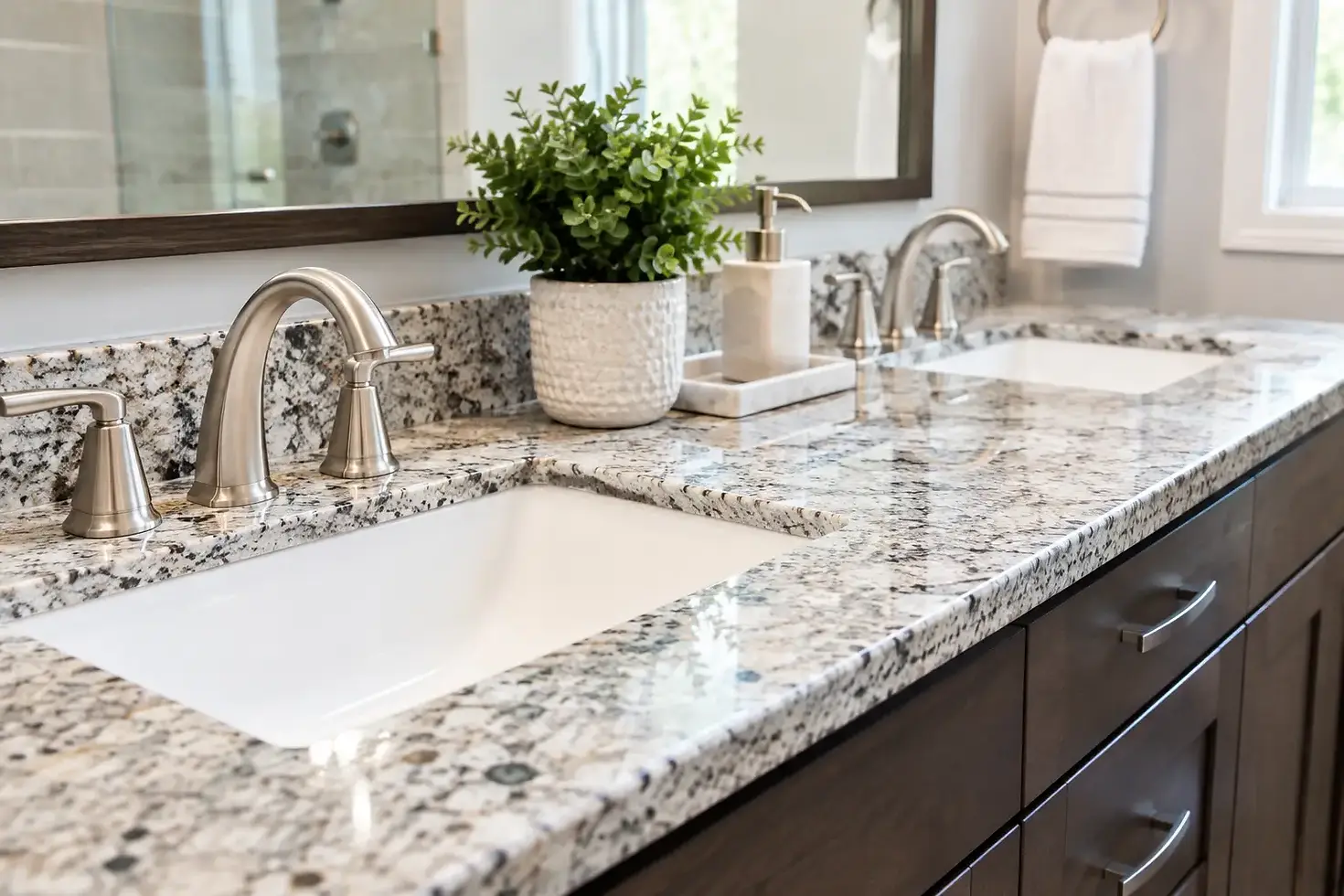
Granite Bathroom Countertops Built to Last
A bathroom vanity is one of the most frequently used surfaces in a home, yet it is often treated as an afterthought. Granite bathroom countertops change that. Each slab brings natural movement, depth, and color to the room while providing a hard-working surface built for daily routines, visiting guests, and years of use.
For homeowners who want a bathroom to feel personal rather than packaged, granite offers something manufactured surfaces cannot duplicate: a design made by nature. From quiet speckling to dramatic veining and rich mineral variation, no two slabs are alike. The right piece can be the detail that ties together cabinetry, tile, mirrors, lighting, and hardware.
Why Granite Bathroom Countertops Earn Their Place
Granite is an igneous natural stone, formed under immense heat and pressure. That origin gives it the dense, durable character homeowners appreciate in a vanity top. It handles the everyday realities of a bathroom well, including water splashes, cosmetics, grooming tools, and the occasional hot styling tool.
Its practical appeal does not come at the expense of beauty. Granite can be soft and understated, with a light neutral background that works beautifully in coastal-inspired interiors. It can also be richly patterned, dark and dramatic, or full of warm gold, gray, blue, green, or burgundy mineral tones. This breadth makes it a natural fit for everything from a classic Savannah renovation to a clean-lined new build.
There is also value in permanence. A well-selected granite slab does not chase a passing finish trend. It brings authentic materiality to a room and develops a sense of belonging as the rest of the home evolves around it. A rock is forever.
A Strong Choice for Busy Vanities
Bathroom countertops experience different demands than kitchen counters. They may see less food preparation, but they are regularly exposed to moisture, toothpaste, skincare products, soap dispensers, and makeup. Granite’s hardness makes it resistant to scratching and everyday wear, particularly when it is properly fabricated, installed, and sealed.
Sealing is not a complicated burden, but it is part of owning natural stone well. A quality sealer helps reduce absorption and gives you more time to wipe up spills before they can leave a mark. The timing depends on the specific granite, its finish, and the product used, so ask your fabricator for a maintenance recommendation tailored to your selected slab.
Daily care is refreshingly simple. Use a soft cloth with warm water and a stone-safe cleaner, then dry the surface when needed. Avoid harsh abrasives, bleach, and acidic cleaners that can dull the finish or affect the sealer. Granite is durable, not indestructible, and gentle care preserves its natural polish.
Choosing the Right Granite Slab for Your Bathroom
A small countertop sample can suggest a color, but it cannot show the full personality of a natural stone slab. Granite may have directional movement, larger mineral deposits, subtle shifts in background tone, or areas that become striking focal points once the vanity is cut. Seeing the complete slab allows you to choose with confidence.
That matters especially in bathrooms, where the countertop often sits close to vertical surfaces and reflective mirrors. Under a bright vanity light, a warm white granite can read differently than it does in a shaded slab yard or on a phone screen. Bring cabinet doors, tile samples, paint swatches, and hardware when you select your stone. Looking at the actual materials together is the clearest way to avoid surprises.
At Garpa Co., homeowners, designers, and fabricators can hand-pick their slab in the public gallery. It is an opportunity to compare stones side by side and find the individual piece that fits the room, rather than settling for a generic representation.
Consider Color Before Pattern
Start by deciding what role the countertop should play. If the cabinetry, floor tile, or shower wall already carries a strong pattern, a calmer granite may give the room visual balance. A light granite with fine movement can add warmth and texture without competing with other finishes.
If the bathroom design is otherwise restrained, a more expressive granite can become the feature. Deep black, charcoal, blue-gray, or richly veined stone gives a powder room a memorable sense of occasion. In a primary bath, a dramatic slab can feel luxurious when repeated thoughtfully in the shower threshold, backsplash, or a nearby ledge.
Natural variation is part of the appeal, but it also calls for intentional planning. Ask to see where the vanity cuts may land on the slab. A fabricator can help position the template so a beautiful vein, mineral cluster, or consistent field becomes visible in the finished countertop.
Match the Finish to the Room’s Feel
Polished granite remains a popular bathroom choice because it reflects light and highlights the stone’s color. It works particularly well with traditional cabinetry, polished nickel, chrome, and bright, tailored interiors. Its smooth surface also makes everyday cleaning easy.
A honed finish has a softer, lower-sheen appearance. It can be a beautiful choice for an organic, collected, or contemporary bathroom, though it may show fingerprints or darken temporarily with moisture depending on the stone. The choice is not simply polished versus honed. It depends on the specific granite and how the bathroom will be used.
Leathered finishes offer texture and a more tactile look, but they are less common for vanity tops because their texture may require more attention around sinks and cosmetics. If this finish appeals to you, view a full slab and talk through care expectations before making a final decision.
Details That Make the Countertop Feel Custom
The slab is the starting point. Fabrication details determine how it lives in the room. An eased edge, with its lightly softened profile, feels clean and versatile. A more substantial ogee or stepped edge can suit a traditional vanity and add visual weight. For a contemporary look, a mitered edge can create the appearance of a thicker stone profile.
Backsplashes deserve equal consideration. A short granite backsplash offers practical protection behind the faucet and keeps the material visually connected to the vanity. Running the same stone full height behind a mirror creates a more architectural effect, especially in a powder room. This approach uses more material, so it is best planned early while selecting slabs and estimating quantities.
Sink selection matters too. Undermount sinks are a natural partner for granite because they create a continuous counter edge that is easy to wipe clean. Vessel sinks can make a statement, but their placement, faucet height, and stone cutout require careful coordination. A fabricator and designer can help ensure the proportions feel intentional.
Where Granite Works Best
Granite is an excellent choice for primary bathroom vanities, guest baths, powder rooms, and commercial restroom vanity surfaces. In a family bathroom, its toughness is especially welcome. In a powder room, even a smaller remnant-sized installation can make a strong design impression.
That said, granite is not automatically the right stone for every concept. If you want pronounced linear veining, a marble or quartzite may better match the vision. If you prefer a very dark, velvety surface with a quieter feel, soapstone may be worth considering. The best material is the one that matches your design priorities, maintenance comfort level, and the individual slab you love.
Granite also brings an environmental advantage that is easy to appreciate. It is a natural material with no artificial additives, and a durable countertop can remain in place for decades rather than being replaced after a short design cycle. Selecting a slab you genuinely want to live with is a more lasting decision.
Make the Selection Personal
The most successful granite bathroom countertops are selected in person, with the room in mind. View the whole slab. Notice how it responds to light. Compare it against your cabinet finish and tile. Look past a small sample to the areas of movement that will become part of your daily view.
A bathroom can be practical and still feel special. Choose a stone that gives you both: a surface ready for real life and a natural detail that makes the room unmistakably yours.


Comments